As an Amazon Associate, I earn from qualifying purchases.
The goal isn't to recreate a grand foyer. It's to create one defined zone that handles the daily chaos of coats, bags, keys, and shoes — so none of that chaos bleeds into the rest of your apartment.
1. Define the Zone With a Rug
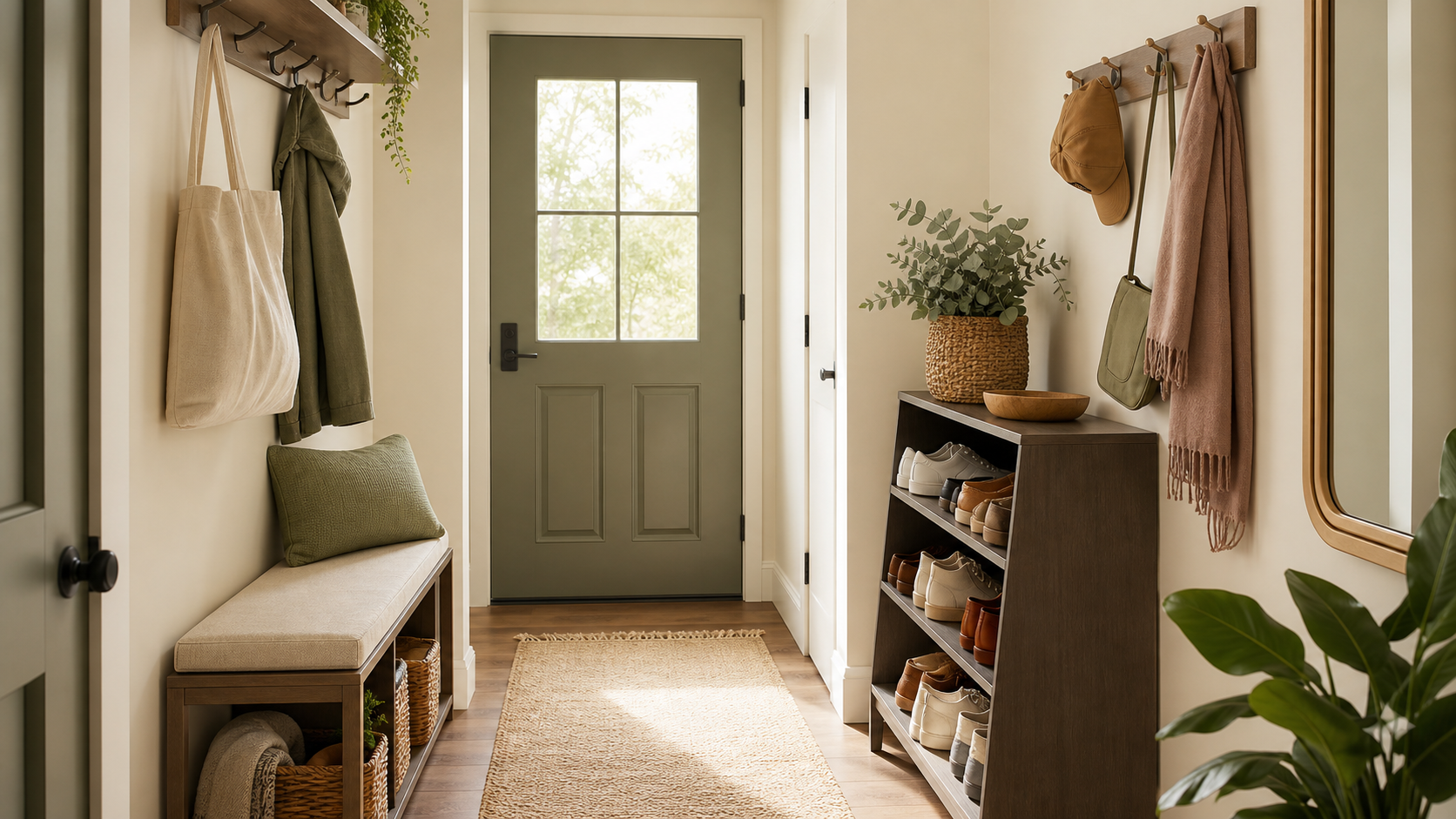
Before anything else, put a rug down. A small entryway rug — even just 2x3 feet — creates a visual boundary that says "this is the entryway." It signals where shoes come off, where bags get dropped, and where the transition between outside and inside happens. Choose something durable and easy to clean: a flat-weave or low-pile rug in a dark or patterned colorway won't show dirt between cleanings. Shop small entryway rugs →
2. Add a Slim Console Table
A narrow console table is the backbone of a functional entryway. Look for one under 14 inches deep — shallow enough to not block a tight corridor, but with enough surface area for a tray, a plant, and a lamp. If it has a drawer or lower shelf, even better: that's where the clutter lives out of sight. Shop slim console tables →
3. Hang a Row of Hooks
One hook is never enough. Mount a row of three to five hooks at varying heights — one for everyday bags, one for coats, one for tomorrow's jacket. In a rented space, a no-drill wall-mounted hook strip works just as well as hardware, especially on drywall. If you want more no-drill ideas beyond the entryway, our complete no-drill storage guide covers every room. The key is having enough hooks that everything has a designated spot, not just the first thing you grab. Shop wall hook strips →
4. Put a Mirror Up
A mirror in the entryway serves two purposes: the obvious functional one (last look before you leave), and a spatial one — it makes the area feel twice as large and bounces light into what is usually a dark corner. A tall leaner mirror propped against the wall is renter-friendly and doesn't require finding studs. Shop entryway mirrors →
5. Control the Shoe Situation
Shoes left by the door are the fastest way to make an entryway feel chaotic. A small shoe rack — even a two-tier one that holds four to six pairs — keeps them off the floor and out of the walkway. Limit it to the shoes you've worn in the last two weeks; everything else goes in the closet. Shop slim shoe racks →
6. Use a Tray for Keys and Small Items
A small tray or dish on the console table is one of those deceptively simple moves that pays off every day. Keys, sunglasses, lip balm, transit card — everything that used to disappear into a bag or a coat pocket now has a home. Marble, ceramic, or woven — pick whatever matches your space. The habit matters more than the tray. Shop catch-all trays →
7. Add a Small Bench or Ottoman
If you have even two extra feet of floor space, a small entryway bench transforms how you deal with shoes. Sitting down to put on and take off shoes is dramatically better than the one-legged hop most people do at the door. A bench with built-in storage underneath doubles as a place to stash shoes, an umbrella, or a reusable bag collection. Shop small storage benches →
8. Bring in One Plant
A single plant near the entryway does something no organizer can: it makes the space feel alive and welcoming rather than purely functional. A hardy low-light option like a pothos or ZZ plant works well near a door that doesn't get much natural light. Put it on the console table in a simple ceramic pot, or on a small stand beside it — either way, it signals that someone lives here intentionally. Shop small plant stands →
None of these require a real entryway to work. They just require a decision to treat that space — however small — as worth designing. Start with the rug and the hooks, and the rest can follow over time.
Shop Small Entryway Essentials on Amazon
Rugs, hooks, console tables, mirrors and more — everything you need to build a functional entryway from scratch.
Shop Small Entryway Essentials on Amazon